In a rapidly evolving AI landscape, countries across the globe are seeking to shape the global AI agenda as they benefit from the technology. The United States under President Donald Trump launched America’s AI Action Plan, which frames AI in terms of geopolitical competition and outlines U.S. plans to secure and sustain global leadership. Across Africa, AI ambitions are rising too, although positioned as a tool for socioeconomic development. The AI for development ambition is embedded in the African Union’s Continental Artificial Intelligence Strategy, a growing set of national AI policies and strategies, and the Africa Declaration on Artificial Intelligence.
Despite this difference in framing, both U.S. and African AI strategies reveal a shared foundational premise: AI will best be built through partnerships. For the United States, global leadership depends on allies who share the country’s technology values and infrastructure standards. For African countries, building sovereign AI capabilities depends on strategic collaboration that centers national priorities. Both acknowledge the need for partners, yet they are largely building those partnerships around each other rather than with each other.
The United States has moved aggressively to structure its global AI engagement through foreign policy instruments including economic packages; bilateral Technology Prosperity Deals with the UK, Japan, South Korea, and Sweden; public-private partnerships like OpenAI for Countries; and coalition-building through the Pax Silica initiative. In Africa, partnerships abound as well, including a $1 billion fund for African startups by the United Arab Emirates, a 58-million-euro AI fund for the Global South by the UK, and a strategic trilateral partnership between Kenya, Italy, and India to expand AI-enabled solutions across Europe, Asia, and Africa.
Most notable, however, is the growing footprint of America’s principal strategic competitor on AI. China has developed foreign policy initiatives and instruments including the Belt and Road Initiative, the Digital Silk Road, and the Forum on China-Africa Cooperation (FOCAC), which have together helped Beijing become the dominant player in Africa’s digital infrastructure. For example, in 2024 China through FOCAC pledged $50 billion, which includes AI-related projects—a China-Africa digital technology cooperation center and twenty digital infrastructure projects by Chinese firms.
Despite this intensifying landscape of AI investment on the continent, a structured U.S.-Africa AI partnership has yet to emerge. That absence is increasingly consequential for the United States as the continent emerges as a critical player in the global competition over AI and as a market that will shape long-term adoption pathways. Countries like Egypt, Kenya, Nigeria, and South Africa are seen as strategic swing states for the establishment of American or Chinese AI technology. Delayed U.S. engagement in these countries risks ceding ground to competitors and allowing competing technology ecosystems to become entrenched. Structured engagement with Africa’s AI landscape is therefore a strategic imperative for Washington.
Translating U.S. AI engagement with Africa into a durable partnership, however, requires the right cooperative instrument—one that can bridge the gap between U.S. strategic ambitions and Africa’s development-centered AI priorities. A Technology Prosperity Deal (TPD)—the bilateral technology cooperation instrument the United States has deployed with allies in Europe and Asia—is such an instrument. It offers the right framework for U.S.-Africa AI engagement: reciprocal, tailored to partners, and anchored in shared strategic interests.
Kenya is a model case, due to its U.S.-aligned strategic interests, vibrant technology ecosystem, national AI strategy, and ongoing conversations with the United States on AI cooperation. This paper presents a framework to help bridge the gap between the United States’ AI global ambitions and its engagement with an African country. The analysis further argues that a U.S.-Kenya TPD could serve as a replicable baseline, adaptable to the specific contexts and priorities of other African partners. At a moment when the architecture of global AI is being built, Africa’s place in it remains unresolved. A TPD could be the path forward.
The U.S. International AI Agenda and Instruments
AI is now a central pillar of U.S. foreign policy. The National Security Strategy identifies technology as a core national interest, and it seeks “to ensure that U.S. technology and U.S. standards—particularly in AI, biotech, and quantum computing—drive the world forward.” The strategy also underscores the importance of securing supply chains and accessing critical materials to attain this ambition. Reinforcing this posture is the Trump administration’s AI Action Plan, launched in 2025. It articulates the country’s AI agenda across three pillars: innovation, infrastructure, and international diplomacy and security. The third pillar details how the United States will drive the adoption of American AI outside of its own borders. To meet the global demand for AI, Washington states that it aims to export a full technology stack—hardware, models, software, applications, and standards—to allied countries around the world. Though some argue that the administration’s desires to advance these goals are at odds with other policies, such as scaling down federal agencies responsible for delivery, these documents nonetheless offer an important indication of stated priorities.
To advance this initiative, the United States initiated the American AI Exports Program—managed by the Department of Commerce and aimed at fostering the development and distribution of comprehensive AI export packages. Although still in its early phase—initiated in October 2025—the program is building a consortium of American AI firms to address global demand. This initiative uses an interagency framework that encompasses the Economic Diplomacy Action Group; the U.S. Trade and Development Agency (USTDA); the U.S. International Development Finance Corporation; and the Export-Import Bank of the United States (EXIM), which has pledged to utilize its comprehensive financing tools, including export credit insurance, working capital, loan guarantees, and direct loans.
As the AI exports program develops, the United States has moved in parallel on international AI diplomacy—and at the center of that diplomacy is a new and consequential instrument, TPDs.
Technology Prosperity Deals
TPDs are nonbinding bilateral agreements signed as memorandums of understanding between the U.S. Office of Science and Technology Policy and partner countries that are key allies. They are designed to align technology standards, accelerate joint research, and expand U.S. AI exports, tailored to each partner country’s technology ecosystem. Four have been signed to date: one with the United Kingdom in September 2025, one each with Japan and South Korea in October 2025, and most recently one with Sweden in May 2026. Each deal shares a common architecture: accelerating AI innovation, aligning regulatory frameworks, promoting full-stack AI exports, and advancing standards cooperation. Yet each is customized to the partner’s distinct technology ecosystem and policy priorities (see table 1). The most recent TPD with Sweden, for example, introduced areas of collaboration absent from the other three, including norm-setting in international bodies such as the International Telecommunication Union and cooperation on subsea cable routes across the Arctic, reflecting Sweden’s distinct strategic advantages and priorities.
The combination of standardized architecture and partner-tailored flexibility makes TPDs an instructive model—one that can be extended to countries seeking to build AI capabilities beyond the current set of signatories. A TPD is not just a cooperation agreement; it is an entry point into the architecture of American AI leadership, aligning standards, accelerating joint research, and expanding U.S. AI exports. That adaptability is precisely what makes TPDs a viable instrument for engaging African countries on their own AI policy priorities.
A TPD is not just a cooperation agreement; it is an entry point into the architecture of American AI leadership, aligning standards, accelerating joint research, and expanding U.S. AI exports.
Technology Prosperity Deals: An Entry Point for U.S.-Africa AI Partnerships
The TPD framework offers the Africa region a viable policy instrument for engagement with the United States. Its deployment in Europe and Asia shows its utility in articulating the U.S. vision for technology cooperation combined with partner country priorities. In Africa, it can be adapted to articulate U.S. and African AI ambitions and to capture the advantages of government-to-government commitments that support private sector deals. This is especially important for African markets, where structural barriers—including regulatory fragmentation, financing gaps, infrastructure deficits, and investment risk—can inhibit commercially attractive growth opportunities. U.S. firms including Google, Meta, Anthropic, and Nvidia already have a presence on the continent, but scaling requires additional market coordination and de-risking that companies cannot secure on their own.
A critique of TPDs is that they are sometimes window dressing for commercial transactions already in process. That critique may have merit in some markets, but in Africa the value of a TPD framework lies precisely in its ability to develop an instrument that addresses the structural constraints that limit U.S. firm growth. It can help advance greater market access and long-term ecosystem positioning that the private sector alone cannot unlock. A central tension, however, that TPDs will have to navigate is digital sovereignty. Partnerships will need to be designed to build local capabilities without creating new dependencies or technology lock-in. Most African AI strategies are keen on maintaining agency in the AI ecosystem. The choice of cooperation instrument is therefore critical to capturing these nuances and getting the design right. The TPD design becomes critical.
A TPD should not, however, be viewed as a perfect instrument. TPDs are largely high-level political frameworks that can be disrupted by broader bilateral tensions entirely unrelated to technology. The pause in the U.S.-UK TPD amid wider trade disputes illustrates this risk, as does the stalled U.S.-Zambia health agreement, which has been complicated by the linkage of health aid to critical minerals. Any U.S. TPDs with African countries will require bracketing from broader bilateral disputes. That will mean developing durable implementation mechanisms. TPDs typically establish bilateral working groups to guide cooperation, set priorities, and oversee implementation through ministerial engagement. Activation of that mechanism in quick succession after signing will be critical.
Pax Silica
TPDs have been deployed alongside the Pax Silica initiative, a coalition of countries with a shared commitment to “build a secure, resilient, innovation-driven technology ecosystem” for AI and its supply chain. Launched in December 2025, Pax Silica (as of May 2026) has fourteen signatories spanning Europe, Asia, the Gulf, and Oceania and a $250 million fund to invest in AI supply chain security (see table 2).
Pax Silica provides an additional instrument for anchoring U.S. AI engagement on the continent. Signatories such as the UAE, who are active investors in African AI infrastructure, provide a foundation on which trilateral or larger engagement could be built in African markets.
Private Sector and Economic Deals
Beyond government-to-government agreements, the United States has actively mobilized its private sector as part of its international AI strategy. Initiatives such as Stargate UAE under OpenAI for Countries demonstrate this model in practice—partnering to develop local AI infrastructure, including data centers and localized AI products. The scale is significant: During Trump’s visit to the Gulf in May 2025, technology deals reached $600 billion in investment with Saudi Arabia and nearly $200 billion with the United Arab Emirates, including the construction of a 5 gigawatt data center. The demand for U.S. AI is global and growing.
Notably, the UAE relationship presents an opportunity to extend the bilateral partnership with Washington into multilateral relationships that include African countries. The UAE is increasingly sitting at the intersection of U.S.-aligned AI architecture and African AI development, creating the conditions for a trilateral relationship linking U.S. AI strategy through Gulf intermediaries to African markets. This is an emerging and underexplored pathway for extending American AI influence on the continent. The coinvestment deal in Kenya with Microsoft and G42, an Abu Dhabi–based company, carries both U.S. and UAE interests and illustrates the potential of this model; though it faces implementation challenges, it equally demonstrates new partnership pathways.
Putting the Instruments Together for Africa
Taken together, U.S. international AI efforts underscore an ambition to build a leading global AI ecosystem while responding to uneven global demand. The rate of AI adoption in the Global North is twice that of the Global South. For African countries, access to American technology becomes critical to address structural limitations in talent, data, and infrastructure that continue to shape this divide. This need is already embedded in African AI policy posture through national AI strategies and the African Union’s Continental AI Strategy, which frames AI as a tool for socioeconomic transformation and calls for strategic international partnerships to build AI capabilities on the continent.
Yet the architecture of U.S. AI engagement—TPDs, Pax Silica, AI exports, and private sector mobilization—has so far bypassed the African continent entirely. No African country has signed a TPD. None is a Pax Silica signatory. Closing that gap will require structured cooperation and urgency. The instruments to do so already exist, but deploying them on the continent will require grounding U.S. AI engagement in its broader strategic posture toward Africa.
The instruments to do so already exist, but deploying them on the continent will require grounding U.S. AI engagement in its broader strategic posture toward Africa.
Urgency of entry into the African market is foregrounded by two dynamics. First, Africa is emerging as one of the most consequential markets in the global competition over AI, shaped by multiple factors that include a youth dividend, an expanding digital economy, and rising government ambitions on AI. By 2050, Africa’s population will jump to 2.5 billion people, and 1 billion will be of working age. That population is increasingly coming online and engaging with AI, and African governments are moving to harness that interaction. A growing body of national AI strategies is repositioning African countries from passive consumers of AI technologies to active participants shaping long-term adoption pathways, standards, and infrastructure alignment.
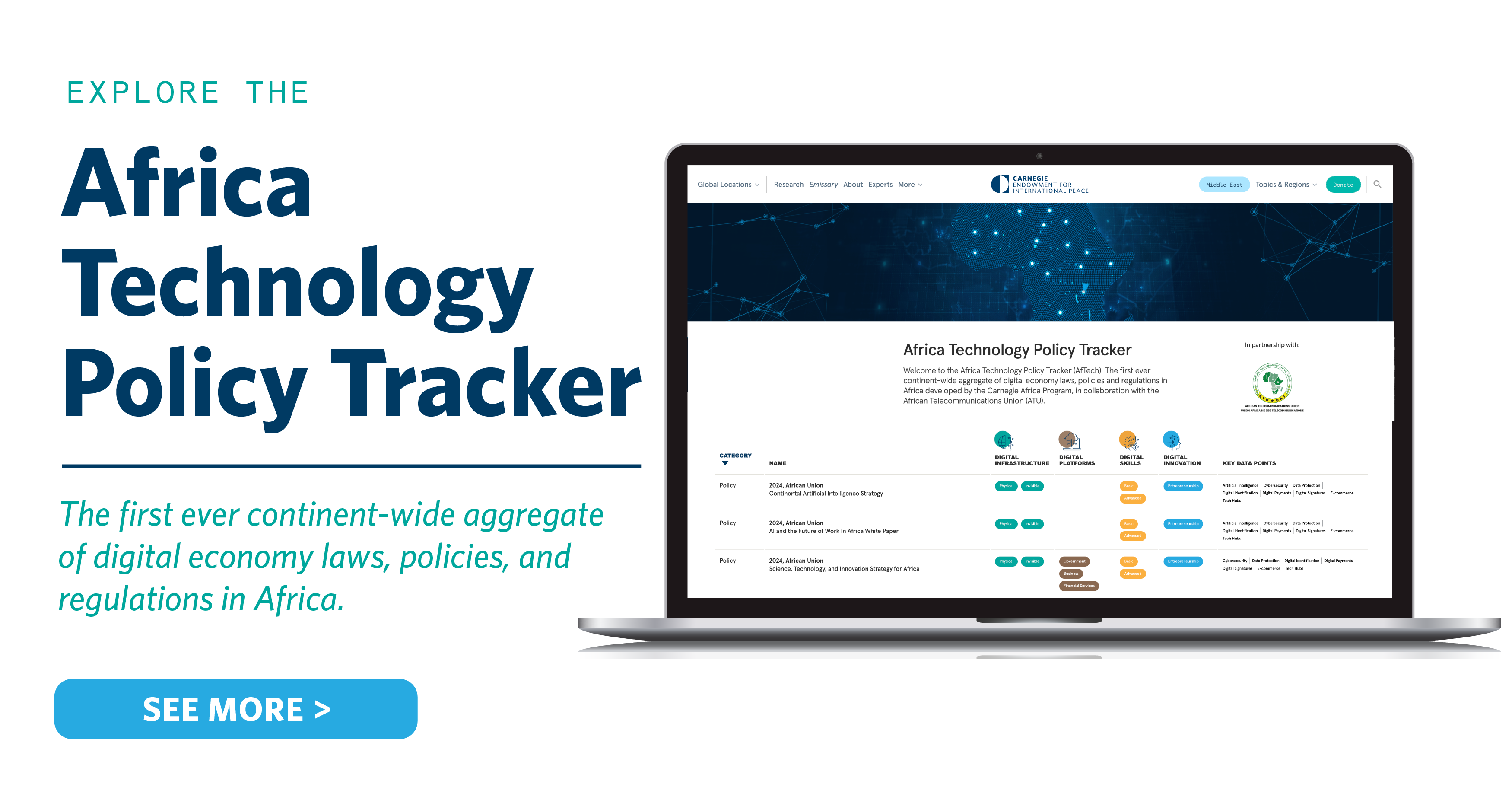
Welcome to the Africa Technology Policy Tracker (AfTech). The first ever continent-wide aggregate of digital economy laws, policies and regulations in Africa developed by the Carnegie Africa Program, in collaboration with the African Telecommunications Union (ATU).
Second, delayed engagement creates space for competitors to establish deeper technology and infrastructure footholds, especially in what are called swing states. China is already advancing a defined AI and digital cooperation agenda on the continent. At the 2024 FOCAC, Beijing adopted an action plan for digital cooperation spanning digital policy, infrastructure, innovation, security, and capacity building. Competing in a market where rivals have defined agendas and are steadily entrenching their capabilities creates urgency for action and creates a narrowing window for shaping long-term AI ecosystem alignment. Delayed U.S. cooperation with Africa will become more costly over time.
This is not to suggest that the United States has been absent from Africa, nor oblivious to its strategic competitor’s movements on the continent. Washington has articulated a strategic posture toward Africa, discussed next. What is needed, however, is translating that vision into structured and durable AI engagement.
A Shifting U.S. Posture Toward Africa
In 2025, the U.S. National Security Strategy presented a shift of intentions from aid to trade, stating that the United States “should transition from an aid-focused relationship with Africa to a trade- and investment-focused relationship, favoring partnerships with capable, reliable states committed to opening their markets to U.S. goods and services.” While actual implementation of those goals remains to be seen, there is no question that any move toward deeper trade relationships would have AI industrialization as a central component: securing access to critical minerals, building the energy and infrastructure capacity to support AI supply chains, and opening African markets to U.S. technology goods and services. Last year, the State Department also announced a commercial diplomacy strategy that prioritized market reforms to unlock investment, bankable infrastructure projects, and mobilization of U.S. private sector capital. If this strategy were fully operationalized, these twin agendas would allow AI cooperation—structured not as development assistance but as a reciprocal technology partnership—to become fully consistent with U.S. strategy toward Africa.
Against this backdrop, early signals of AI-specific engagement are emerging. During the India AI Impact Summit, Kenya’s Cabinet Secretary for Information, Communications and the Digital Economy William Kabogo Gitau announced that Kenya and the United States had engaged in discussions to explore structured cooperation on AI—focused “on practical pathways to accelerate AI adoption and deployment, including innovative financing mechanisms, integration into the American AI stack, capacity building through the U.S. Tech Corps, and strengthening our infrastructure readiness”—including investments in data centers, reliable power, fiber optic connectivity, and commercially viable projects. At the continental level, a parallel signal emerged ahead of the annual African Union Summit in February; in January, the United States and the African Union Commission agreed to establish a Strategic Investment Working Group to foster U.S.-Africa economic partnerships, facilitate trade, and drive digital transformation across the continent.
These engagements are meaningful, but signals of intent are not the same as structured cooperation. Translating them into durable partnerships will depend on aligning U.S. engagement with the specific priorities shaping Africa’s AI agenda.
African AI Policy Landscape and Priorities
Understanding what meaningful AI cooperation with Africa looks like begins with Africa’s own policy frameworks. The continent’s AI governance landscape is rapidly taking shape. Data from the Africa Technology Policy Tracker show that sixteen countries have published national AI strategies or policies, alongside continental ambitions articulated through the African Union’s Continental Artificial Intelligence Strategy (see figure 1).
Taken together, these documents reveal a set of African priorities on AI. Governments are seeking to build AI-driven economies as part of broader digital transformation efforts.
Taken together, these documents reveal a set of African priorities on AI. Governments are seeking to build AI-driven economies as part of broader digital transformation efforts, with a focus on applying AI in key sectors such as agriculture, healthcare, public services, education, and job creation—particularly for Africa’s youth. Central to realizing this ambition is building the core AI capabilities necessary to deploy the technology at scale. While emphasis varies across countries, these capabilities converge around seven areas: talent, data ecosystems, compute and digital infrastructure, innovation and market development, investment, governance, and institutional coordination—as articulated in the 2025 Africa Declaration on Artificial Intelligence, an outcome document of the Global AI Summit on Africa 2025. A comparative analysis of the national AI strategies (listed in figure 1) shows the convergence, reinforcing the declaration’s framework. Across countries, there is a consistent view of what constitutes the foundational capabilities required to build and deploy AI at scale (see figure 2).
These seven priorities are significant not only as a map of Africa’s AI needs but also as a framework for what structured cooperation must address. They signal a growing and specific demand for AI across the continent—one that external partners, including the United States, are well-positioned to engage. The TPD model, built around partner-tailored cooperation across exactly these kinds of capability areas, offers a ready-made architecture. But to be viable, that cooperation will need to be structured at the country level, beginning with countries that have established national AI strategies and have existing strategic ties with the United States.
To be viable, that cooperation will need to be structured at the country level, beginning with countries that have established national AI strategies and have existing strategic ties with the United States.
Kenya as a Model Case for U.S.-Africa AI Partnership
Activating a TPD on the continent requires a strategic entry country; Kenya provides a model case, though not the only viable option. Other African countries, particularly those identified as strategic swing states, could serve similar roles. Kenya’s strength as an entry point lies in its long-standing ties with Washington, including with the Trump administration; its technology ecosystem, dubbed the Silicon Savannah; its status as the home to M-PESA, the revolutionary mobile money platform; and the fact that major U.S. technology firms, including Google, Microsoft, IBM, and Cisco, already maintain operations in Nairobi. A U.S.-Kenya AI partnership would therefore be less of a new commercial frontier and more of an extension of established technology relationships.
The foundation for deeper engagement is further found in Kenya’s Artificial Intelligence Strategy (2025–2030), which defines priority areas across AI infrastructure, data, research and innovation, talent, governance, investment, ethics, and inclusion. The strategy further identifies “partnerships with other countries and global tech companies” as a vehicle for AI knowledge transfer, digital infrastructure development, robust supply chains, research and design, talent development, and governance. Public-private-academia partnerships are also identified as an avenue to accelerate AI development and align innovation with national priorities.
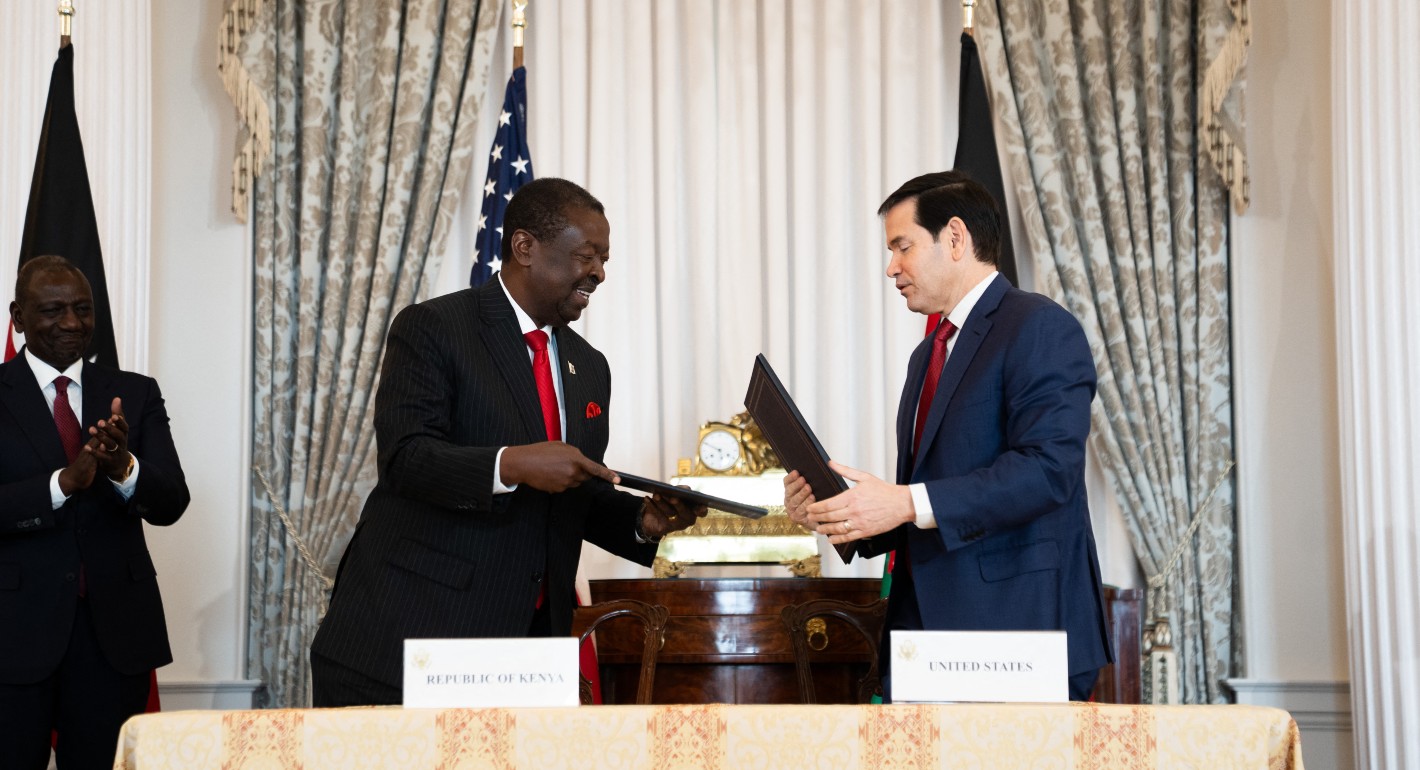
Kenya’s profile is further shaped by its established bilateral relationship with the United States spanning trade, security, and development cooperation, and the relationship has recently extended into AI-specific dialogue, as evidenced by discussions at the India AI Impact Summit. Kenya’s combination of a defined national AI strategy and an existing U.S. bilateral relationship makes it a relevant reference point for examining what a TPD with an African country could look like in practice.
Table 3 outlines the elements that might be covered under a U.S.-Kenya TPD. The Japan and South Korea deals were signed under a regional framework yet customized to each country’s distinct technology ecosystem and priorities—an adaptability that is particularly relevant for Africa, where countries share common AI capability priorities but pursue distinct national ambitions.
A U.S.-Kenya TPD would ideally be organized around the hallmark principle of accelerating AI adoption and innovation, the defining commitment shared by all four TPDs signed to date. Seven focus areas should shape the framework:
AI infrastructure across the full technology stack, including compute, data centers, and connectivity
Governance and regulatory alignment to harmonize AI policy frameworks and industry standards
Skills, research, and innovation to develop talent pipelines, joint research programs, and AI applications in priority sectors such as healthcare, education, and agriculture
AI commercial diplomacy to connect U.S. and Kenyan technology firms through targeted investment mobilization
Financing mechanisms mapping public, private, and blended instruments from both countries
A regional and multilateral strategy envisioning the TPD as a platform for broader U.S. AI engagement across East Africa, including potential Kenyan participation in Pax Silica
Soft diplomacy and people-to-people connectivity, including visa pathways, exchange programs, academic partnerships, and air connectivity, as channels through which a signed agreement could be brought to life
These are illustrative proposals, outlined in table 3. Any TPD that moves from concept to adoption would need to be shaped through substantive negotiations between both governments, grounded not only in a shared vision but also in dialogue and a keen awareness of the material capabilities each party brings to the partnership.
From Framework to Partnership
The TPD framework outlined above aligns U.S. AI export ambitions with Kenya’s national AI priorities. Importantly, it extends beyond technology transfer to include the complementary enablers—energy investment, financial instruments from both governments, and private sector mobilization—that determine whether cooperation translates into tangible outcomes on the ground. The framework is grounded in the logic of shared economic value, consistent with both the U.S. National Security Strategy’s trade-not-aid posture and Kenya’s own preference for partnerships that build sovereign AI capability.
The framework also integrates soft diplomacy measures—including eased visa pathways for AI talent, researchers, and entrepreneurs—that are essential to translating a signed agreement into execution. This is particularly important in a context where U.S. adversaries have established deep political, commercial, and technological ties across the continent. For the United States, demonstrating a more competitive and credible partnership will be essential to building the trusted global AI ecosystem its own strategy depends on.
For the United States, demonstrating a more competitive and credible partnership will be essential to building the trusted global AI ecosystem its own strategy depends on.
The framework’s regional aspect underscores the potential for a bilateral agreement to produce wider network effects. Kenya’s growing technology partnership with the UAE, itself a Pax Silica signatory and active investor in African AI infrastructure, further illustrates the networked character of the partnerships that a TPD could help formalize and anchor. Kenya’s potential participation in Pax Silica through the TPD framework, for example, would extend the value of cooperation beyond the bilateral relationship into a shared ecosystem of trusted technology partners. For the United States, this advances its goal of building a global coalition of technology allies; for Kenya, it provides access to a global network that strengthens and diversifies its AI partnership ambitions.
However, three structural challenges bear consideration.
The first concerns the availability and affordability of U.S. technology in African markets, a persistent constraint that has contributed to the expansion of competing technology ecosystems on the continent, and one that the financing mechanisms outlined in the framework are specifically designed to address.
The second concerns implementation. A TPD framework identifies areas of cooperation but does not deliver them. Translating commitments into outcomes requires a coordinated delivery model drawing on the interagency architecture already established through the American AI Exports Program, including USTDA, EXIM, and DFC, as well as clear accountability mechanisms to ensure that ministerial-level commitments cascade into commercial and technical action on the ground. One natural next step for the United States, for example, would be mapping the specific government owners across each of the seven focus areas identified in the framework, clarifying which agencies and offices carry primary responsibility for delivery. Kenya would need to undertake the same exercise on its side. Such a mapping would serve a dual purpose: helping both governments coordinate effectively, and making it clear for the private sector where to engage with government.
The third concerns messaging. A TPD offers the United States an instrument that can help counter China’s AI interests on the continent. It is worth noting, however, that African countries are not seeking partners for geopolitical competition; they are seeking partners that can help build AI capabilities, expand digital infrastructure, accelerate innovation, and support economic transformation. An approach centered on strategic competition with China may resonate in Washington, but it is less likely to gain traction in Nairobi, Lagos, or Lusaka. What is needed is a recalibration of engagement framing, grounded less in geopolitical rhetoric and more in the practical value of the U.S. AI ecosystem. The strength of the U.S. position lies in its technology stack, research ecosystem, private sector innovation, and financing capacity. Translating those advantages into partnerships that African governments, developers, and entrepreneurs view as commercially accessible and developmentally relevant should be the central objective of engagement.
The strength of the U.S. position lies in its technology stack, research ecosystem, private sector innovation, and financing capacity.
Conclusion
The global AI race is shaped not only by technology, but also by the partnerships that are built around it. The United States has moved decisively to structure its AI engagement through bilateral agreements, coalitions, and private sector mobilization—yet Africa remains largely outside that architecture. The continent is not waiting. African countries are increasingly developing AI strategies and building partnerships to drive AI for socioeconomic transformation.
The path forward is not without friction, but TPDs can help reduce it. Making U.S. technology available and affordable in African markets is imperative. Commitments will need to be translated into coordinated delivery through the interagency architecture that already exists. And engagement will need to be framed around Africa’s development ambitions, not Washington’s competitive lens. The UAE’s emerging role as both a U.S. AI partner and active investor in African AI infrastructure illustrates that the architecture for a trilateral engagement model already exists; what is missing is the direct bilateral framework to formalize and anchor it within a coalition of countries bound by shared technology commitments.
The question is no longer whether the United States and Africa will engage on AI, but whether that engagement will be structured, reciprocal, and built to last. A U.S.-Kenya Technology Prosperity Deal illustrates one practical path: a model that aligns both countries’ AI interests, anchors U.S. partnership in Africa, and carries the potential to scale. The opportunity is there, and the instruments exist. What remains is the political will to use them.
Acknowledgments
The author would like to thank Sylvester Quansah for his research assistance.
Carnegie does not take institutional positions on public policy issues; the views represented herein are those of the author(s) and do not necessarily reflect the views of Carnegie, its staff, or its trustees.
More Work from Carnegie Endowment for International Peace
The second International AI Safety Report is the next iteration of the comprehensive review of latest scientific research on the capabilities and risks of general-purpose AI systems. It represents the largest global collaboration on AI safety to date.
In Africa, AI has the potential to grow the continent’s economy by an estimated $2.9 to 4.8 billion by 2030. In recognition of the AI promise, African stakeholders are increasingly positioning themselves to expedite AI adoption and realize its benefits.